
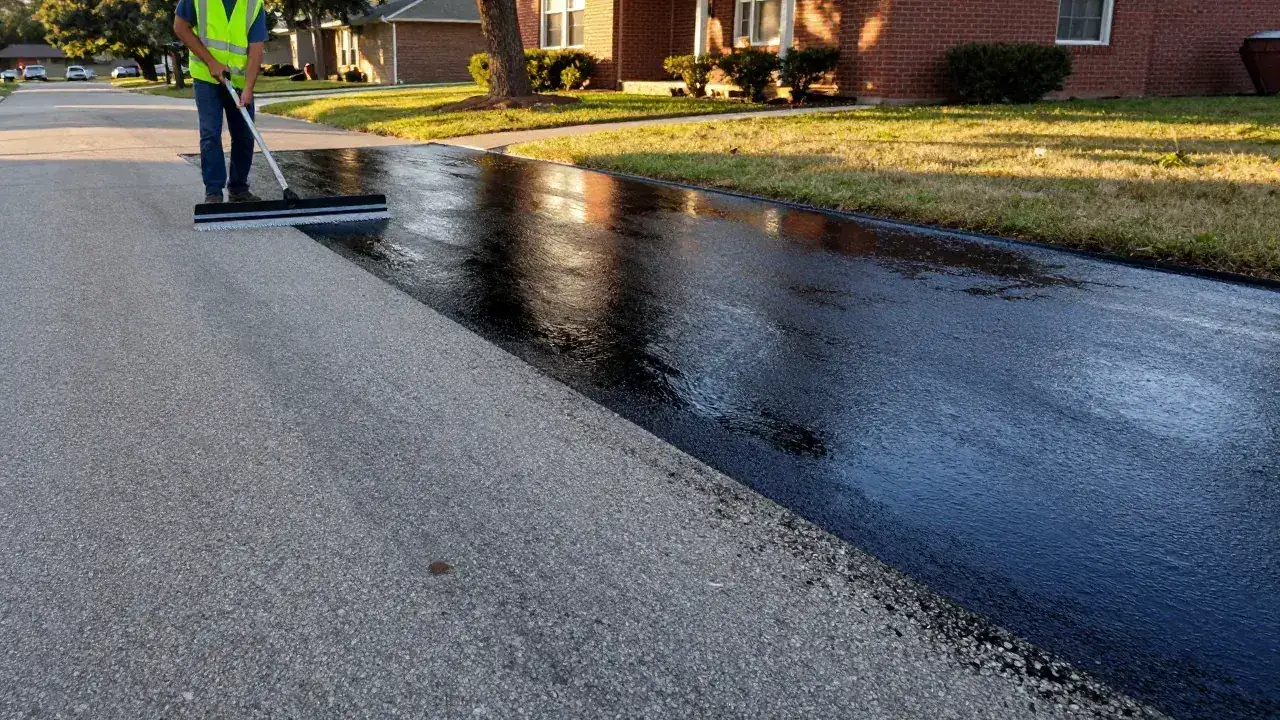
What sealcoating does and does not do
Sealcoat is a liquid coating spread over asphalt that shields the binder from sun, rain and spilled oil and gas. It slows the drying and graying that make asphalt brittle, and it makes the surface easier to keep clean. It does not fix a failed base, fill potholes, or hold a broken surface together. Those need repair first, and that is why our sealcoating price includes a look at the cracks and soft spots.
How a driveway or lot is sealcoated
- Clean. The surface is swept and blown clean, and oil spots are treated so the sealer will bond.
- Fill cracks. Cracks are cleaned out and filled with hot-pour or cold-pour crack filler.
- Edge. The borders along the garage, walks and curbs are cut in by hand.
- Two coats. Sealer is applied by squeegee or spray, and the second coat goes on after the first dries.
- Keep off. The area is closed to cars until it cures, usually about a day in warm weather.
Call (469) 405-6359 Request a callback
Driveway sealcoating timing in North Texas
Sealer needs warm, dry weather to cure, so most jobs here run from spring through early fall, avoiding days when rain is forecast. A new asphalt driveway should wait several months before its first coat so the surface can cure. After that, every two to three years is typical for a home drive. Lots with heavy traffic wear faster in the drive lanes than in the stalls.
Asphalt sealcoating for parking lots
On business, church and HOA lots, sealcoating is usually done in sections so part of the lot stays open, and it is followed by restriping because the coating covers the old lines. The asphalt driveway cost page lists the per-square-foot reference range for sealcoating.