
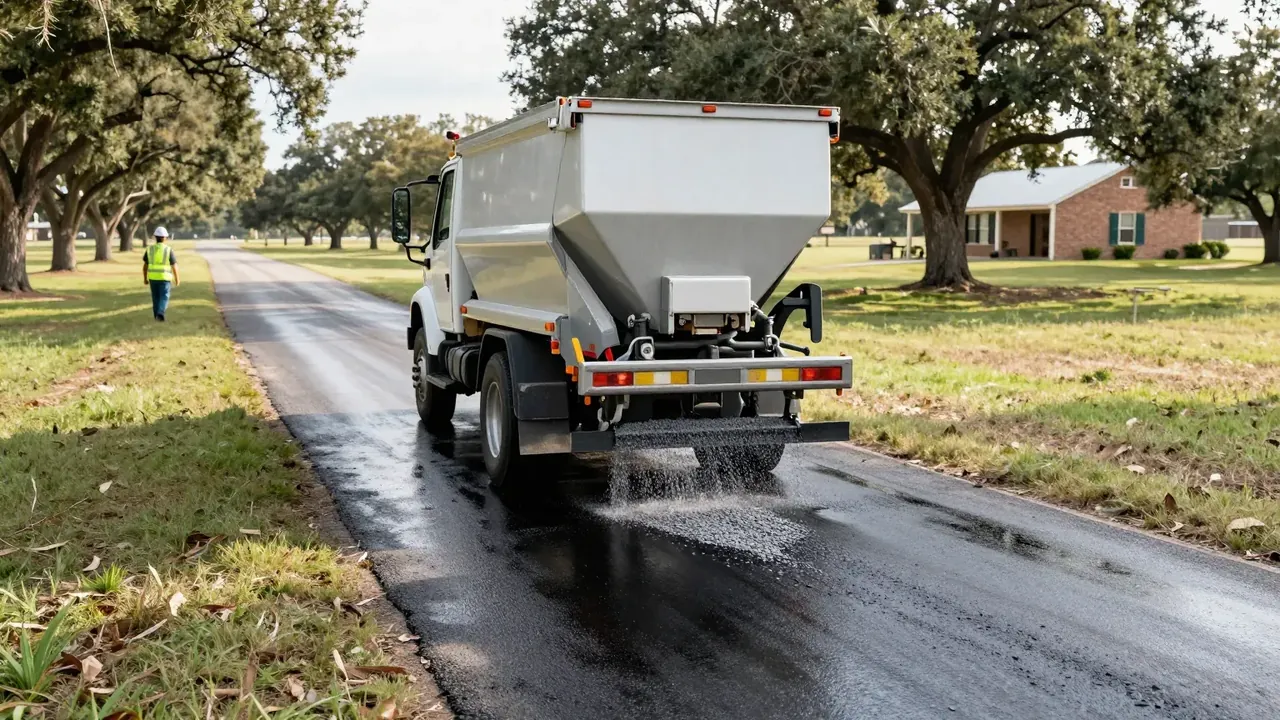
How a chip seal driveway is laid
- Prepare the base. The drive is graded, and crushed stone is added and compacted where the ground is soft. Chip seal is thin and takes the shape of what is under it, so the base has to be right.
- Spray the asphalt. A distributor sprays an even coat of hot asphalt or asphalt emulsion across the surface.
- Spread the chips. Clean, graded stone chips are dropped onto the asphalt straight away, while it is still sticky.
- Roll them in. Rollers press the chips into the asphalt so they bed down.
- Sweep the loose stone. After the surface has set, extra chips are swept off.
A second layer, a double chip seal, makes a thicker, longer-wearing surface and is worth it on a drive that sees daily traffic.
Call (469) 405-6359 Request a callback
Chip seal paving in North Texas weather
The stone on top shields the asphalt from the sun, so a chip seal handles long hot summers well, and the rough texture gives tires grip in rain. Hard braking and tight turns can scuff chips loose, especially in the first weeks while it settles, so it suits drives where cars run straight more than drives where they swing around in front of a garage. Hail can knock chips out of a worn surface, and a fresh seal coat of chips every several years renews it.
Tar and chip or hot-mix
For a long drive across open land toward Rockwall or Wylie, chip seal usually costs noticeably less per foot than hot-mix asphalt. For a short driveway in a subdivision, the smoother look of hot-mix paving is usually what owners and HOAs want. A recycled asphalt driveway is another lower-cost choice and can be chip sealed later. We will price the options side by side on the walk-through.