
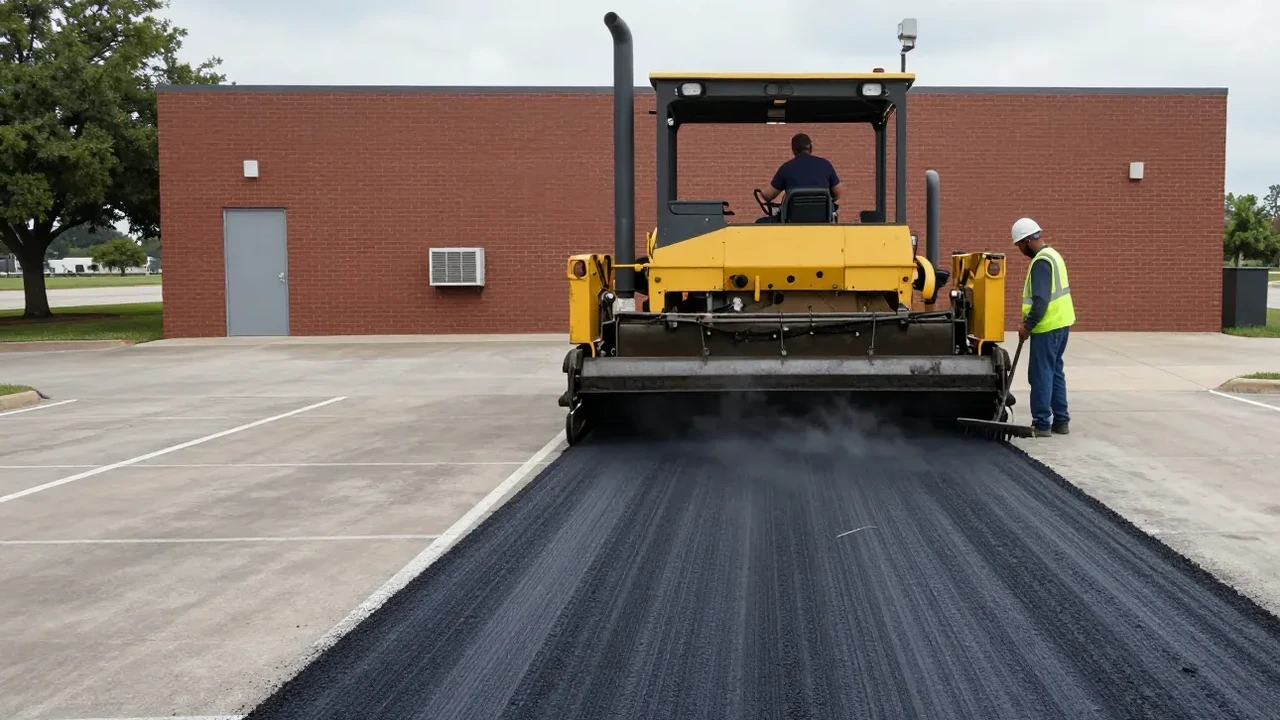
New lots and full rebuilds
A new or rebuilt lot starts with the ground. On Garland's clay, that usually means removing soft soil, building a compacted stone base thick enough for delivery trucks, and grading the surface so water runs to inlets or the street instead of pooling in the stalls. Asphalt then goes down in one or two layers, thicker in drive lanes and at loading areas than in the stalls. Curbs, wheel stops and the tie-in to the public street are part of the plan from the start.
Overlays for lots that are worn but sound
A lot that has gone gray and cracked but still has a firm base can often be overlaid. Failed areas are cut out and patched, the edges along curbs and gutters are milled so the new surface meets them flush, a tack coat is sprayed, and a new layer of hot-mix is laid and rolled. An overlay costs much less than a rebuild and gives the lot years more life.
Call (469) 405-6359 Request a callback
Keeping the property open
Most lots cannot close for a week. We plan the work in sections so customers, members or residents always have a way in and somewhere to park, and we schedule the noisy and messy work around your busiest hours where we can. Church lots are usually done midweek; retail lots are often done in sections with the entrance last.
Commercial paving checklist
- Where water pools now, and where the inlets and outfalls are.
- Truck routes for deliveries and trash pickup, which need the thickest pavement.
- Accessible parking and the route from it to the entrance.
- Fire lanes and any markings the city or fire marshal requires.
- Whether the work needs a city permit or review.
After paving, parking lot striping lays out the stalls, and sealcoating every few years keeps the surface sealed. For smaller failures, see asphalt repair and pothole repair.