
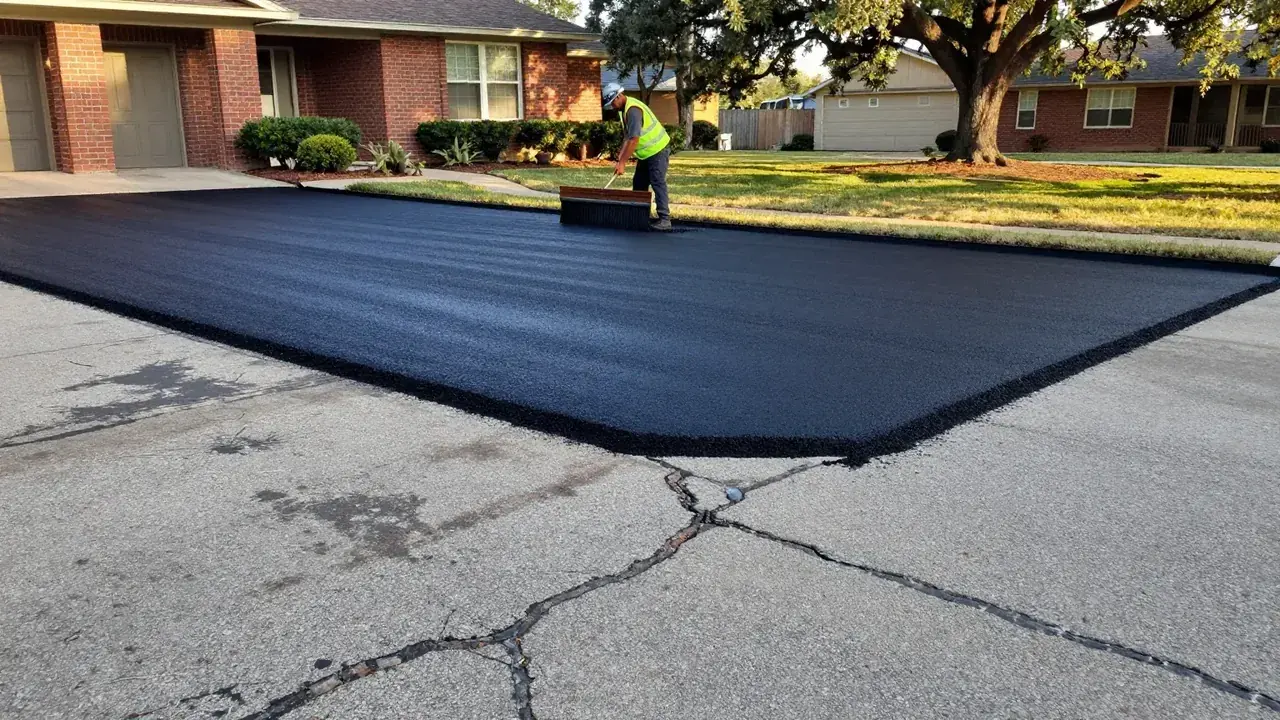
When a driveway is a good candidate for an overlay
Resurfacing works when the problem is the top of the pavement, not what is under it. Surface cracks, raveling where loose stone shows, and a worn, faded look are all fine. The driveway should not flex when a car drives over it, should not have deep ruts or wide alligator cracking, and should not hold standing water. If it does any of those, an overlay will copy the problem within a couple of summers, and driveway replacement is the better spend.
How an asphalt overlay is done
- Repair first. Soft or sunken areas are cut out and patched with hot-mix so the overlay has a solid base everywhere.
- Clean and seal cracks. The surface is cleaned and the larger cracks are filled.
- Mill or key the edges. Where the drive meets the garage slab, the street or a sidewalk, the old asphalt is cut down so the new layer finishes flush instead of leaving a lip.
- Tack coat. A thin asphalt emulsion is sprayed so the new layer bonds to the old one.
- Lay and roll. An inch and a half to two inches of hot-mix is spread and compacted.
Call (469) 405-6359 Request a callback
Height at the garage and the alley
Every overlay raises the driveway. On a drive that has already been overlaid once or twice, the surface can end up level with or above the garage slab, which sends rain under the door. Where the drive meets a concrete alley, the same thing happens in reverse and water pools at the joint. We check those heights on the walk-through. When there is no room to go up, the old surface is milled down first, or the honest answer is a full replacement.
Resurfacing a parking area or a long drive
The same overlay method works on small business lots and church parking, and on long private drives where most of the length is still sound. For lots, the parking lot paving page covers phasing so the business stays open. For the price lines behind an overlay, see the asphalt driveway cost page.