
Why potholes keep coming back
A pothole starts as a crack that lets water into the base. Traffic pumps the wet base until it loses support, the asphalt above breaks up, and the pieces get thrown out by tires. Cold patch pressed into the hole lasts until the next heavy rain because nothing has changed underneath. In North Texas the cycle speeds up after a wet spring or a hard freeze, when the clay is at its softest.
How we repair a pothole
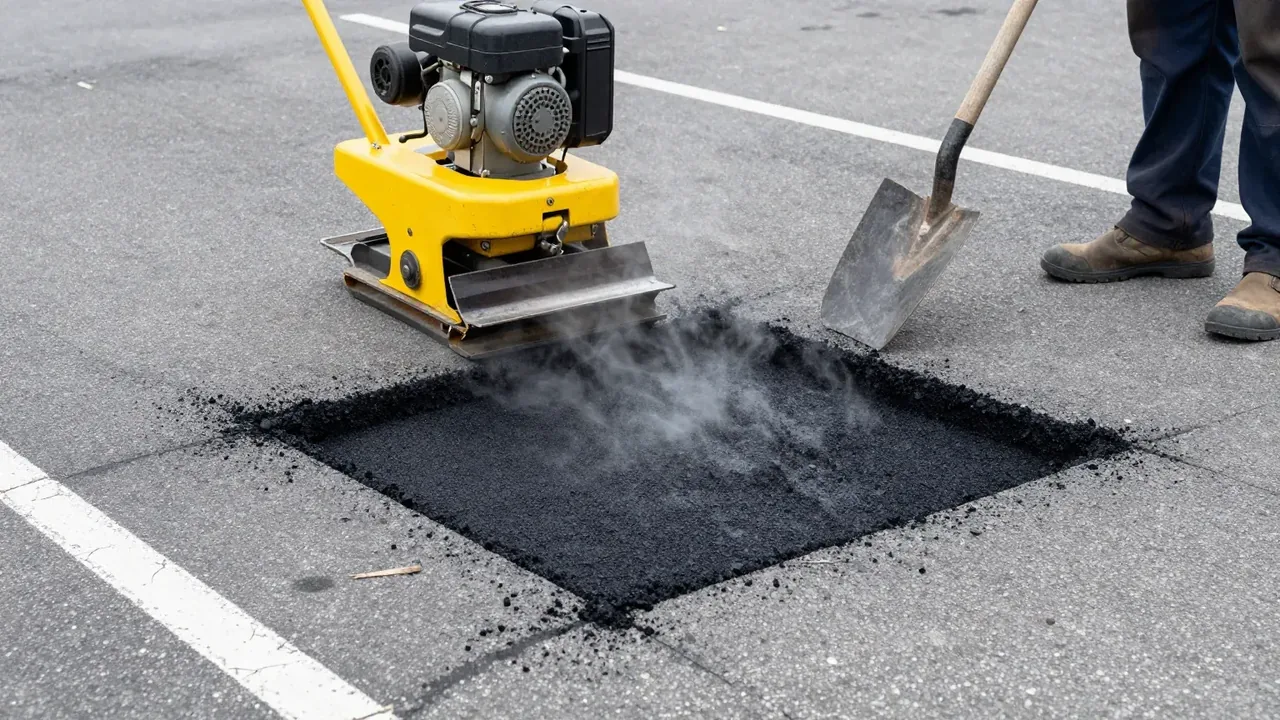
- Cut it square. The broken area and the cracked asphalt around it are saw-cut into a clean rectangle with straight walls.
- Dig out the wet base. Soft material comes out, and crushed stone goes back in and is compacted.
- Tack the edges. The cut walls are coated so the new asphalt bonds to the old.
- Fill with hot-mix. Hot asphalt is placed in lifts and compacted with a plate or roller until it is level with the surface.
- Seal the joint. The seam around the patch is sealed so water does not start the next hole.
Call (469) 405-6359 Request a callback
Lots, entrances and private roads
Most potholes we fix are at business and church entrances, in drive lanes where delivery trucks turn, by dumpster pads, and on private roads in older developments. A bad one at an entrance is a hazard for customers and a liability question for the owner. Where there are many, it is usually a sign the lot needs an overlay; the parking lot paving page covers that, and smaller failures are on the asphalt repair page.